Can a Sneeze Kill You?
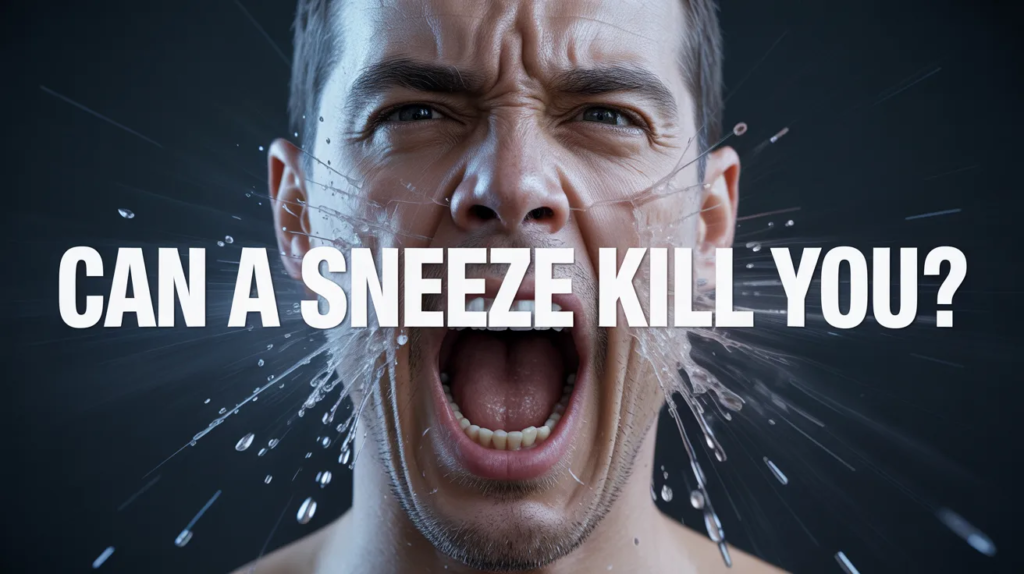
It sounds like a joke question at first. You sneeze hard, your whole body jolts, and for a split second it feels violent enough to knock the wind out of you. Then you laugh it off and move on. But the reason so many people ask can a sneeze kill you is because sneezing does not feel gentle. It feels explosive.
For almost everyone, the honest answer is no. Sneezing is a normal reflex designed to protect your body by clearing irritants from your nasal passages and airways. You have sneezed thousands of times without consequence.
But here’s where the curiosity comes from.
A sneeze creates an intense burst of pressure inside your chest, neck, and head in a very short amount of time. Under rare circumstances, that pressure can stress blood vessels, nerves, and lung tissue. That does not mean sneezing is dangerous in everyday life, but it explains why the question keeps coming up.
People often underestimate what the human body is capable of during reflex actions. It is similar to the moment many readers have when they discover that your brain actually runs on electricity and not thoughts floating in space. Once you understand what is happening behind the scenes, ordinary bodily functions suddenly feel much more powerful.
To really answer whether sneezing can ever be deadly, you first need to understand what your body is doing during that split second before the release.
What Actually Happens Inside Your Body When You Sneeze
A sneeze is not just air coming out of your nose. It is a full-body neurological event controlled automatically by your brain.
It begins when tiny sensors in your nasal lining detect an irritant like dust, pollen, or pepper. That signal travels straight to your brainstem, which acts as a control hub for reflexes you do not consciously control. From there, your brain fires off commands to multiple muscle groups all at once.
Your lungs pull in a deep breath without you realizing it. The muscles in your chest and diaphragm tighten. Your vocal cords briefly close, trapping air inside. Pressure starts to build rapidly in your chest, throat, and head.
Then everything releases at once.
Air can blast out of your nose and mouth at speeds that rival powerful wind gusts. That force is strong enough to send microscopic droplets several feet through the air, which is why sneezing spreads germs so efficiently. The pressure does not just move outward. It also pushes inward on the structures of your lungs, blood vessels, and nerves.
This is why sneezing feels so intense and sometimes leaves you momentarily disoriented. It is also why, under the wrong conditions, sneezing can strain delicate areas of the body. The human body generates more force during reflexes than most people realize, much like the surprising effects explored in the creepy reason you sometimes feel like someone is watching you, where instinct and biology collide in unexpected ways.
Next, we’ll break down how much pressure a sneeze actually creates, and why trying to hold one in is where things can start to go wrong.
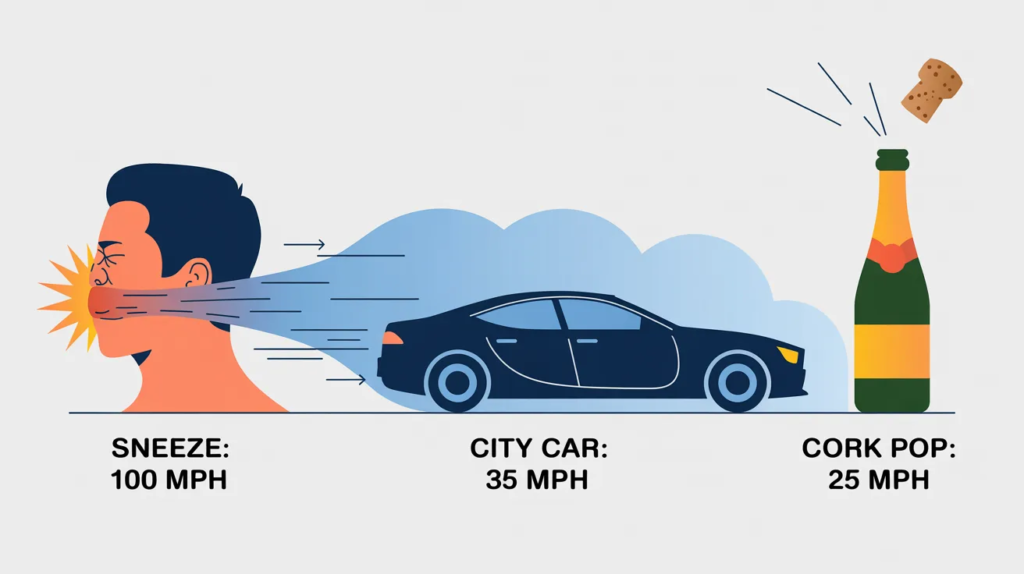
How Much Pressure Does a Sneeze Really Create?
A sneeze may feel quick, but the forces involved are anything but small.
When you sneeze, air can exit your nose and mouth at speeds estimated to reach well over 100 miles per hour. That burst is powered by a rapid pressure buildup inside your chest and airway, similar in mechanics to other forceful bodily actions like coughing or straining. The difference is how suddenly everything releases.
Inside your body, pressure spikes in the lungs, throat, head, and neck all at once. Under normal circumstances, your tissues are built to handle it. Blood vessels flex, lungs expand and contract, and nerves fire without issue.
But pressure is only safe when it has somewhere to go.
This is where people start to get into trouble. When pressure is redirected inward instead of outward, it can stress weak points in the body. That same concept shows up in other surprising ways throughout biology, like how sound behaves very differently depending on its environment. For example, sound moving shockingly fast underwater happens because pressure waves travel more efficiently through dense material. Your body is no different. When pressure is trapped, it behaves in ways most people never expect.
A sneeze by itself is not dangerous. The pressure spike is brief and usually harmless. Problems start when that pressure is blocked, amplified, or hits a vulnerable area.
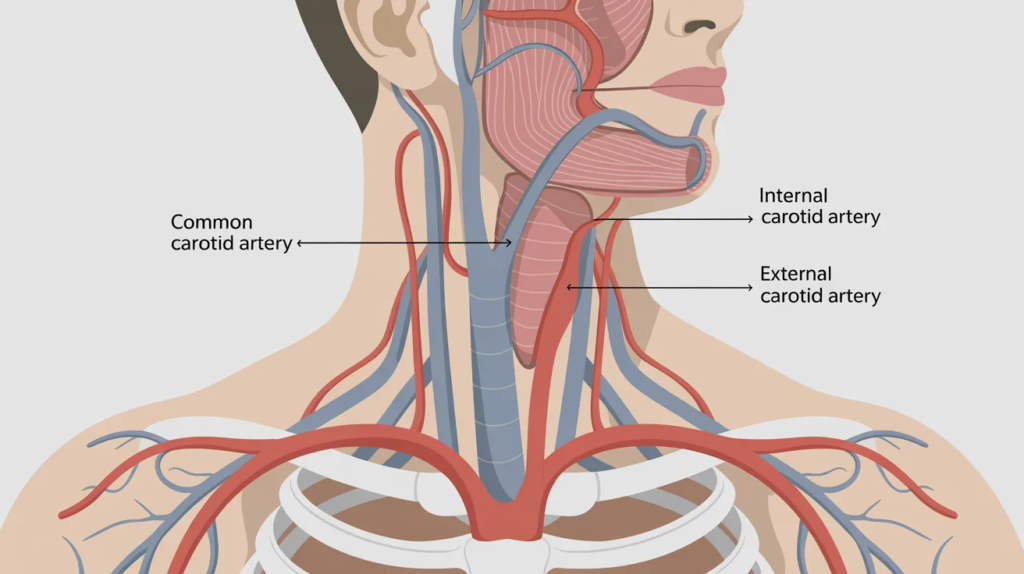
Why Holding in a Sneeze Is the Real Risk
If there is one habit doctors consistently warn against, it is holding in a sneeze.
When people clamp their nose shut or close their mouth to suppress a sneeze, the pressure has nowhere to escape. Instead of blasting outward, it is forced inward into delicate structures that are not designed to absorb that kind of sudden force.
Medical reports have documented cases of ruptured eardrums, torn throat tissue, popped blood vessels in the eyes, and even collapsed lungs caused by suppressed sneezes. These injuries are rare, but they are real.
The danger is not the sneeze itself. It is the redirection of pressure into places like the middle ear, neck, and lungs. That trapped pressure can strain blood vessels and soft tissue in ways that feel instantaneous.
This is why sneezing feels so uncomfortable when you try to stop it. Your body is fighting against a natural release mechanism. It is similar to what happens when fire cannot breathe and pressure builds inside a confined space, leading to unpredictable outcomes. We explored this exact principle in what really happens when fire can’t breathe, and the same physics apply inside the human body.
Letting a sneeze out feels dramatic, but it is actually the safest option. Your body designed the reflex for a reason.

Can a Sneeze Cause a Stroke or Brain Injury?
This is where the question can a sneeze kill you starts to feel less like clickbait and more like a serious medical curiosity.
A normal sneeze does not cause strokes in healthy people. That part needs to be clear. But in very rare cases, sneezing has been linked to a specific type of injury involving the arteries in the neck.
The concern is something called a carotid or vertebral artery dissection. These arteries supply blood to the brain, and a sudden spike in pressure or sharp neck movement can, in rare situations, cause a small tear in the artery wall. That tear can disrupt blood flow and potentially lead to a stroke hours or even days later.
Sneezing does not create this risk out of nowhere. Almost every documented case involved underlying factors like connective tissue disorders, weakened blood vessels, or pre existing vascular problems. The sneeze was not the cause. It was the trigger.
This is similar to how people misunderstand other bodily signals and assume the sensation itself is dangerous. For example, many people panic when they feel watched or suddenly alert for no reason, even though the cause is usually rooted in ancient survival instincts rather than actual danger. We explored that phenomenon in the creepy reason you feel like someone is watching you, and sneezing fears often follow the same pattern of misunderstanding biology.
Doctors emphasize that sneezing is not something to fear. The body is designed to handle it. The risk only appears when rare vulnerabilities already exist.
Can a Sneeze Stop Your Heart?
The idea that a sneeze could stop your heart sounds like something pulled straight from an urban legend, but it has a real physiological explanation.
Sneezing briefly affects heart rhythm through stimulation of the vagus nerve, which plays a role in regulating heart rate and blood pressure. This is why some people feel lightheaded or momentarily dizzy after a powerful sneeze. The heart may pause for a fraction of a second, then immediately resume its normal rhythm.
In healthy individuals, this is harmless and goes completely unnoticed.
In extremely rare cases involving serious heart conditions, abnormal rhythms, or extreme nervous system sensitivity, a sneeze could theoretically contribute to fainting or dangerous heart rhythm changes. Even then, it would not be the sneeze alone. It would be the sneeze interacting with an already unstable system.
This is another example of how the human body runs on electrical and chemical signals that constantly balance on a razor’s edge without us realizing it. That balance is why reflexes feel dramatic but usually resolve instantly, much like the subtle electrical systems behind thought and movement explained in how your brain runs on electricity.
So while sneezing can briefly influence your heart, it is not stopping it in any meaningful or lasting way for healthy people.
Next, we’ll look at real documented medical cases where sneezing caused serious injury, and why those stories spread so fast online.
Real Medical Cases Where Sneezing Caused Serious Harm
Most stories about sneezing sound exaggerated until you realize doctors have documented real injuries tied to powerful sneezes. Not common. Not expected. But real.
There are confirmed medical cases where people suffered collapsed lungs after violent sneezing fits. Others experienced ruptured throat tissue or bleeding in the neck caused by sudden pressure spikes. In these situations, the sneeze was not acting alone. It exposed a weakness that already existed.
One of the most surprising things about these cases is how delayed symptoms can be. Someone sneezes, feels fine, then hours later develops neck pain, chest tightness, or neurological symptoms that send them to the emergency room. That delay is why sneezing injuries are often misunderstood or dismissed at first.
This pattern shows up often when the body is pushed just past its limits. It mirrors how people are shocked to learn how much of their life quietly disappears during routine activities they never question. We explored that idea in the shocking truth about how much of your life you lose behind the wheel. Sneezing injuries follow a similar logic. The danger is not obvious because it hides inside something familiar.
Doctors stress that these cases are rare for a reason. The human body is resilient. But when multiple stress factors line up at once, even something as ordinary as a sneeze can become the tipping point.
Who Is Most at Risk From Sneezing Complications?
For the average person, sneezing is not something to worry about. But certain conditions increase the chance that a powerful sneeze could cause problems.
People with known aneurysms or weakened blood vessels face higher risk because sudden pressure changes can stress vessel walls. Those with connective tissue disorders may have arteries and tissues that tear more easily. Severe lung disease, recent chest or neck surgery, and uncontrolled high blood pressure also raise the stakes.
Age alone is not the deciding factor. Overall vascular and tissue health matters far more. This is why doctors rarely warn healthy patients about sneezing, but pay close attention when someone has underlying structural vulnerabilities.
It is similar to how oxygen production on Earth depends on systems that seem simple until you look closer. Plants quietly manage a process that keeps everything alive, but disruption changes everything. That same hidden complexity is explored in the truth about how plants actually make the oxygen you breathe, and the human body operates with the same silent precision.
If sneezing causes sudden chest pain, vision changes, severe headache, or weakness, doctors recommend seeking medical care immediately. Those symptoms are not normal sneeze reactions.
Next up, we will cover what doctors say about sneezing safely, and how to let your body do what it was designed to do without adding unnecessary risk.

What Doctors Say About Sneezing Safely
Doctors are remarkably consistent on this topic. Sneezing itself is not dangerous. Trying to stop it is.
Medical professionals recommend letting a sneeze happen naturally whenever possible. Turning your head away, using a tissue, or sneezing into your elbow allows pressure to release outward the way your body designed it to. What they warn against is forcefully pinching your nose shut or closing your mouth to suppress the reflex.
When pressure cannot escape, it looks for another path. That pressure may push into the ears, throat, lungs, or blood vessels in the neck. Letting a sneeze out might feel intense, but it is far safer than trapping that force inside your body.
Doctors also advise paying attention to what happens after a sneeze. Temporary discomfort is normal. Sharp chest pain, severe headache, vision changes, numbness, or weakness are not. Those symptoms warrant medical attention.
This mismatch between what feels alarming and what actually matters is common in human biology. Many people are surprised to learn that your heart constantly communicates with your brain in subtle ways most people never notice, yet we ignore those signals while overreacting to harmless sensations. Sneezing falls into the same category. Understanding the process removes fear and replaces it with awareness.

So Can a Sneeze Kill You or Is It Just Internet Fear?
For healthy people, sneezing is not deadly. It is not even dangerous. The human body is built to withstand the speed, pressure, and force involved in a sneeze, and it does so millions of times every day without issue.
But the reason the question can a sneeze kill you refuses to disappear is because rare does not mean impossible. In people with underlying vulnerabilities, weakened blood vessels, severe lung disease, or recent surgery, a sneeze can act as a trigger. Not the cause, but the final stress that exposes a hidden problem.
Online, that nuance disappears. Stories get simplified. Headlines get dramatic. Fear spreads faster than facts. The same thing happens in science all the time, where fascinating discoveries are reduced to shock value. A perfect example is how headlines exaggerate findings like the so-called planet made of diamonds scientists actually studied, even though the real science is far more interesting than the myth.
Sneezing sits at the intersection of ordinary life and extreme physics. Most of the time, it is harmless. Occasionally, it reveals how much force the human body can generate without us ever realizing it.
That tension between normal and extreme is exactly why this question keeps getting asked, and why it fits perfectly with the kind of everyday science and curiosity FactFuel exists to explore.

Frequently Asked Questions About Sneezing and Safety
Can holding in a sneeze actually kill you?
Holding in a sneeze is not likely to kill you, but it can cause serious injuries in rare cases. When you block your nose or mouth, pressure has nowhere to escape and can damage the ears, throat, lungs, or blood vessels in the neck. Doctors consistently advise letting sneezes happen naturally to avoid unnecessary risk.
Has anyone actually died from sneezing?
There are no confirmed cases of healthy people dying directly from a sneeze alone. However, medical reports show that sneezing has triggered severe complications in people with underlying conditions such as weakened arteries or lung disease. In those cases, the sneeze acted as a trigger rather than the root cause.
Can sneezing cause a brain aneurysm to burst?
Sneezing does not create aneurysms, but in extremely rare situations, a sudden pressure spike could contribute to complications if an aneurysm already exists. This is why people with known vascular conditions are advised to be cautious with anything that dramatically increases internal pressure.
If you are curious about how pressure and perception inside the body can influence awareness and reactions, this connects closely to the unsettling reason people sometimes feel like they are being watched, which also comes down to how the brain processes internal signals.
Why do sneezes feel so violent compared to coughs?
Sneezes involve a rapid, full-body reflex that builds pressure before releasing it all at once. Coughs tend to release air in shorter, repeated bursts. That sudden release is why sneezes feel explosive and why suppressing them is more dangerous than suppressing a cough.
Can a sneeze stop your heart?
Sneezing can briefly affect heart rhythm through nerve stimulation, which is why some people feel lightheaded afterward. In healthy individuals, this effect is harmless and temporary. It does not stop the heart in any meaningful or lasting way.
Understanding how electrical signals regulate bodily functions, including heart rhythm, becomes clearer when you explore how the brain operates using electricity rather than abstract thought.
When should you see a doctor after a sneeze?
Seek medical attention if a sneeze is followed by severe chest pain, sudden weakness, vision changes, intense headache, or difficulty breathing. Those symptoms are not normal sneeze reactions and may indicate an underlying issue that needs immediate evaluation.