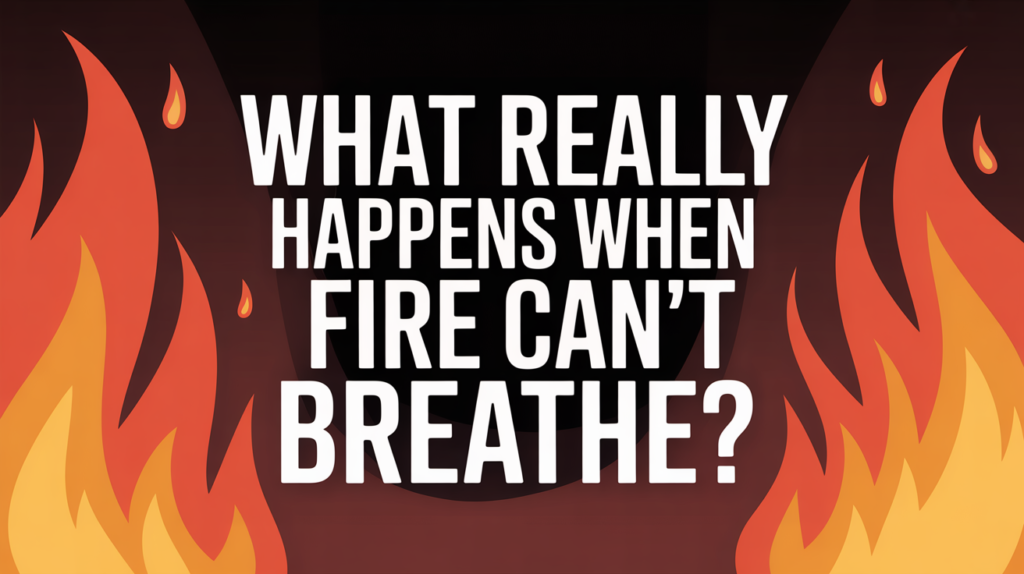
What Happens When Fire Runs Out of Air?
I remember the first time this really clicked for me. I lit a candle, covered it with a glass, and just watched. At first, nothing happened. Then the flame shrank, flickered like it was struggling, and finally disappeared. That simple moment explains what happens when fire runs out of air better than any textbook ever could.
Fire is not a thing. It’s a reaction. And the second air is taken away, that reaction starts to fail. The flame doesn’t instantly die. It weakens, loses energy, and then collapses. That visual slowdown is your first clue that fire is completely dependent on the air around it.
When people ask what happens when fire runs out of air, the short answer is this: the fire suffocates. The longer answer is way more interesting, because it explains how fire actually works at a molecular level.
Once I understood this, I started noticing it everywhere. Candles. Campfires. Kitchen flare-ups. Even science experiments. Fire lives on borrowed oxygen, and once that supply dries up, the show is over.
This is one of those everyday science facts that feels obvious after you learn it, but until then, most of us never really think about it.
If you enjoy these kinds of curiosity-driven explanations, this is exactly the kind of content we break down over on FactFuelHQ.com where simple questions lead to surprisingly deep answers.
Why Does Fire Need Oxygen to Burn?
Fire needs oxygen for the same reason your car needs gas. No fuel, no movement. In the case of fire, oxygen is the fuel that keeps the chemical reaction alive.
Here’s the simple version. Fire happens through a process called combustion. Combustion is a chemical reaction between heat, fuel, and oxygen. Remove any one of those, and the fire can’t survive.
Oxygen’s job is to react with the fuel. That reaction releases energy in the form of heat and light, which we see as flames. When oxygen levels drop, the reaction slows down. Less reaction means less heat. Less heat means the flame can’t sustain itself.
That’s why when you blow out a candle, you’re not “blowing the flame away.” You’re disrupting the oxygen around it just enough to stop combustion.
This also explains why fire behaves differently depending on its environment. A fire in open air can burn strong and steady. A fire trapped in a small space burns weaker and dies faster.
Understanding why fire needs oxygen helps explain everything from why forest fires spread so fast to why fire extinguishers work the way they do.
This kind of cause-and-effect science is what fits perfectly into our Science & Space category where we break down complex reactions into real-world explanations that actually make sense.
- Can Sneezing Be Fatal? Rare but Real Scenarios Explained
- The Creepy Reason You Feel Like Someone Is Watching You
- Why Sound Moves Shockingly Fast Underwater

What Is the Fire Triangle and Why Does It Matter?
There’s a simple concept firefighters and scientists use called the fire triangle. Once I learned it, fire suddenly made way more sense.
The fire triangle has three parts:
- Heat
- Fuel
- Oxygen
Fire needs all three at the same time. Take away just one, and the fire goes out.
When fire runs out of air, the oxygen side of the triangle collapses. The fuel might still be there. The heat might still exist. But without oxygen, the chemical reaction can’t continue.
This is why smothering a fire works. Putting a lid on a grease fire cuts off oxygen. Covering a candle with a jar removes air. Even fire blankets work by blocking oxygen from reaching the flames.
What surprised me most is how often people misunderstand this. Water doesn’t always “kill” fire by cooling it. Sometimes it works because it interrupts oxygen contact. Other times, like grease fires, water actually makes things worse because the fuel is still active.
The fire triangle isn’t just theory. It’s the reason fire behaves the way it does in real life. And once you understand it, fire stops feeling random and starts feeling predictable.
That predictability is why learning what happens when fire runs out of air isn’t just interesting. It’s practical knowledge that can actually keep you safer.
Why Does a Flame Shrink Before It Goes Out?
This part always fascinated me. Fire rarely just disappears. It struggles first.
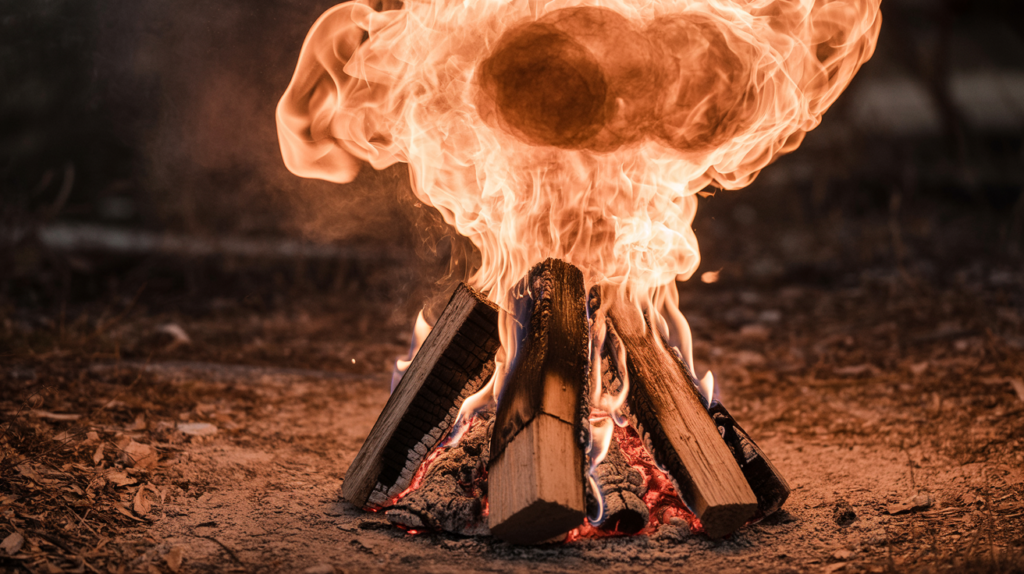
When oxygen levels drop, the flame doesn’t have enough energy to stay tall and bright. The combustion reaction slows down. Less energy is released. The flame gets smaller because it literally has less power to maintain itself.
You’ll often see a flame turn darker or more orange right before it goes out. That color change is a sign that combustion is becoming incomplete. The fire is running out of oxygen and producing more smoke and carbon particles instead of clean flame.
I’ve watched this happen dozens of times once I knew what to look for. Candles under glass. Campfires dying down at night. Even gas stoves when airflow is restricted.
That shrinking flame is basically fire’s warning sign. It’s the moment oxygen becomes the limiting factor.
This visual behavior is also why fire behaves so strangely in unusual environments like space or sealed containers. The shape, size, and movement of flames are all controlled by oxygen availability.
If you enjoy understanding the hidden mechanics behind everyday things like this, you’ll probably like browsing the Facts category where we break down simple questions with real explanations, not surface-level trivia.

What Happens When Fire Is Trapped in a Closed Space?
This is where things get serious and a little scary.
When fire is trapped in a closed space, like a room, a jar, or even a car, oxygen gets used up fast. At first, the fire burns normally. Then it starts pulling oxygen from whatever air is available. Once that oxygen drops below a critical level, the flame weakens and eventually goes out.
But here’s the dangerous part most people don’t realize. Even when the flames disappear, the space can still be filled with heat, fuel vapors, and toxic gases.
That means the fire looks gone, but the conditions for ignition are still there.
This is why firefighters treat enclosed fires so cautiously. Introducing fresh oxygen too fast can cause a sudden reignition or even an explosion. The fire wasn’t dead. It was starving.
Understanding what happens when fire runs out of air in enclosed spaces explains why opening a door during a fire can be incredibly dangerous. Oxygen rushes in. The reaction restarts violently.
It’s also why putting a lid on a fire works better than spraying random things at it. You’re not fighting the fire. You’re cutting off its oxygen supply.
This kind of real-world science is exactly why fire safety advice exists in the first place.
Why Can Fire Restart After It Goes Out?
This part surprised me when I first learned it.
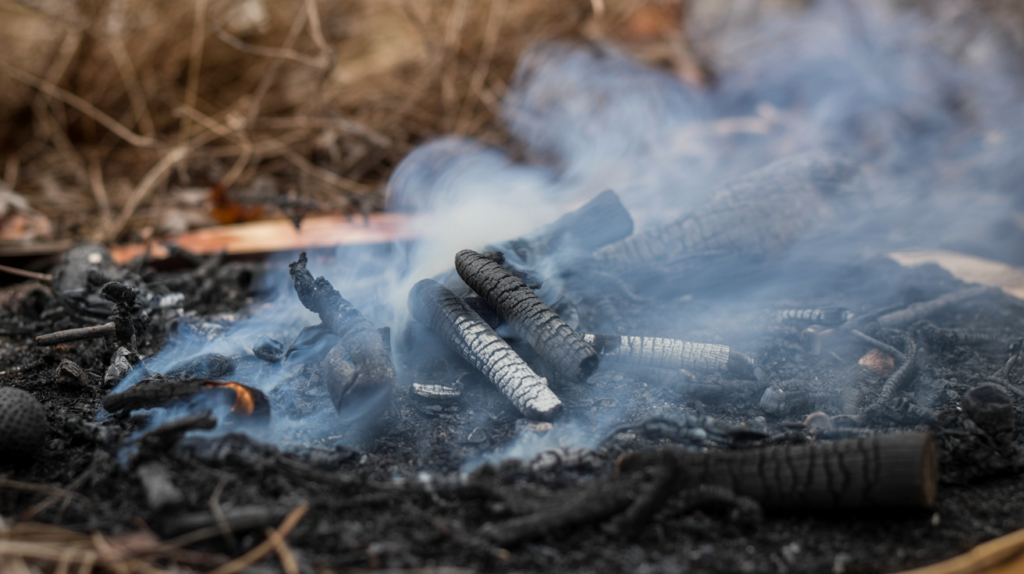
Fire can appear to go out, but if the fuel is still hot enough and oxygen returns, it can reignite on its own. This happens because the chemical reaction didn’t fully stop. It just paused.
In low-oxygen conditions, fuel can release flammable gases without producing visible flames. Once oxygen comes back, those gases ignite instantly.
This phenomenon is sometimes called backdraft, and it’s one of the most dangerous fire behaviors out there.
You see smaller versions of this at home too. Ever noticed a campfire flare back up after you poke it? You didn’t add fuel. You added oxygen.
This is why fire extinguishers are designed to either cool the fire below ignition temperature or block oxygen completely. Just knocking the flames down isn’t enough.
Once I understood this, it changed how I thought about “dead” fires. Fire doesn’t always end cleanly. Sometimes it’s just waiting.
That’s why knowing why fire needs air is more than trivia. It’s understanding a reaction that can restart the moment conditions change.

What Happens to Fire in Low-Oxygen Environments Like Space?
Now here’s where it gets wild.
Fire behaves very differently when gravity and airflow are removed. In space, flames don’t flicker upward like they do on Earth. They form small, round, blue spheres instead.
Why? Because on Earth, hot air rises and pulls fresh oxygen in from below. In space, there’s no convection. Oxygen doesn’t naturally flow toward the flame.
As oxygen near the flame gets used up, the fire slowly starves instead of flaring dramatically. The flame burns cooler, weaker, and eventually goes out much more quietly.
NASA experiments have shown that fires in low-oxygen environments produce less soot but more dangerous gases like carbon monoxide. That makes them harder to detect and potentially more dangerous in closed systems like spacecraft.
So yes, even in space, what happens when fire runs out of air follows the same rule. No oxygen, no sustained flame. The only difference is how quietly it dies.
This kind of science sits right at the intersection of everyday curiosity and space physics, which is why it fits perfectly under Science & Space on Fact Fuel.
Why This Simple Fire Experiment Teaches a Bigger Lesson
The candle-under-a-glass experiment looks basic, but it teaches something powerful.
Fire isn’t aggressive. It isn’t alive. It’s conditional.
Fire only exists when the environment allows it to. The moment oxygen disappears, fire loses its power. That same rule applies whether it’s a birthday candle, a wildfire, or a controlled burn in a lab.
Once I understood this, fire stopped feeling mysterious. It became logical. Predictable. Even preventable.
And that’s the real takeaway here.
Understanding what happens when fire runs out of air isn’t just a cool fact. It explains why fire safety rules exist, why extinguishers work, and why simple actions like smothering flames are so effective.
It also reminds us how many everyday things are driven by invisible forces we never think about. Oxygen. Pressure. Heat. All quietly shaping the world around us.
If you like learning the “why” behind everyday phenomena like this, you’ll feel right at home exploring more articles across Fact Fuel, especially in categories like Facts, Nature & Earth, and Science & Space.
Fire may look powerful, but in the end, it survives on borrowed air. Take that away, and the flame has no choice but to fade.
Why Understanding Fire and Air Actually Matters
Once you really understand what happens when fire runs out of air, fire stops feeling mysterious and starts feeling logical. Fire isn’t aggressive. It isn’t alive. It doesn’t decide anything. It simply reacts to its environment.
Take away oxygen, and the reaction collapses. That’s it.
That single fact explains why candles die under jars, why grease fires need lids instead of water, why fires in closed rooms are so dangerous, and even why flames behave so strangely in space. Fire only looks powerful because oxygen keeps feeding it.
What blew my mind most while researching this is how often people underestimate oxygen’s role. Heat and fuel get all the attention, but air is the silent partner that decides whether fire lives or dies. Without it, the flame has nowhere to go.
Understanding what happens when fire runs out of air isn’t just interesting science. It’s practical knowledge. It makes you safer. It helps you react smarter. And it turns a simple experiment into a lesson about how the world actually works.
That’s what Fact Fuel is all about. Simple questions. Real explanations. Big “oh wow” moments hiding in everyday life.